
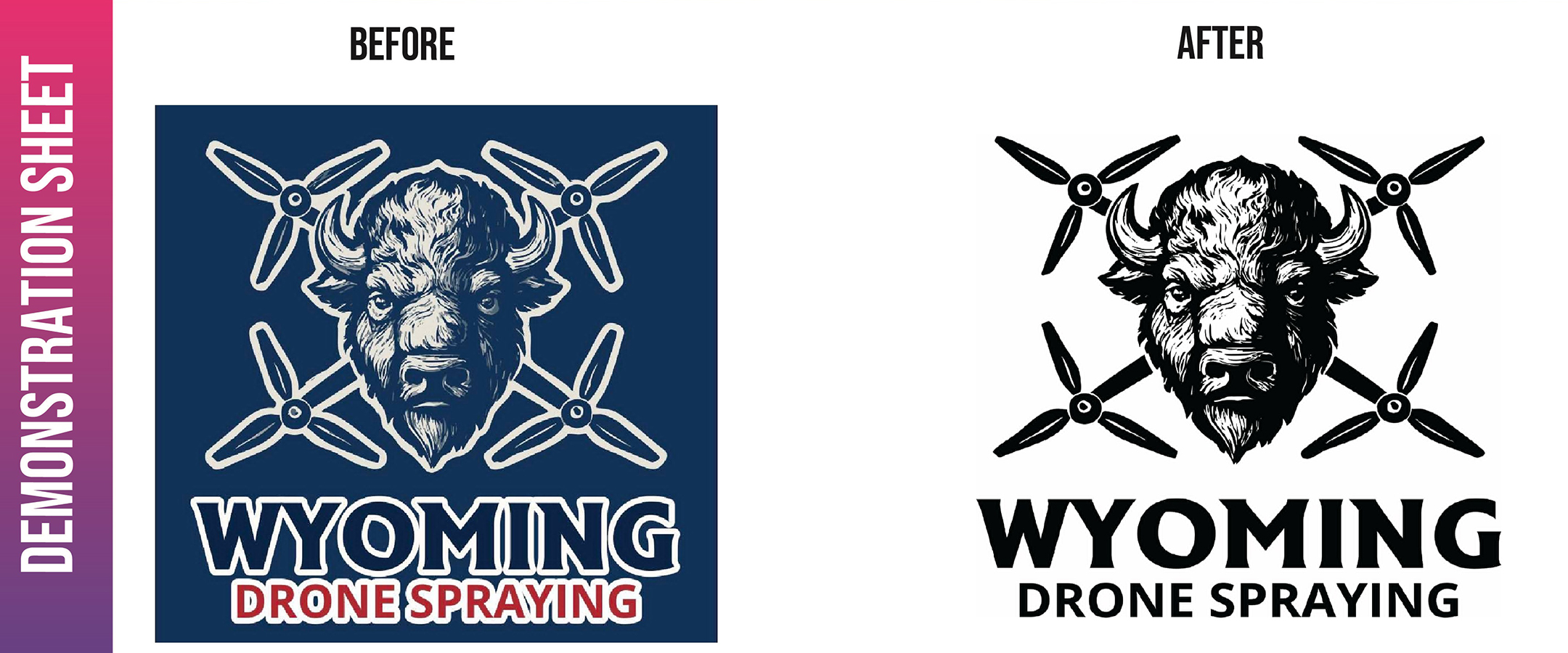
How Vector Art Improves Print Quality
Whether you’re printing custom t-shirts, business cards, banners, promotional products, or preparing artwork for embroidery, the quality of your design file plays a crucial role in the final result. One of the biggest factors that determines print quality is whether your artwork is in a vector format. Unlike low-resolution images that become blurry when enlarged, vector artwork remains perfectly sharp at any size. This makes it the preferred file type for professional printing, branding, signage, apparel decoration, and manufacturing. In this guide, we’ll explain what vector art is, why it matters, and how it helps produce cleaner, more professional prints across a wide range of applications.
What Is Vector Art?
Vector art is digital artwork created using mathematical paths, points, curves, and shapes instead of pixels. Because vectors are based on mathematical calculations, they can be scaled to any size without losing quality. Common vector file formats include:
– AI (Adobe Illustrator)
– EPS
– SVG
– PDF (Vector)
– CDR (CorelDRAW)
– DXF
These formats are widely accepted by print shops, embroidery digitizers, sign manufacturers, laser cutters, and apparel decorators.
Raster Images vs. Vector Artwork
Before understanding why vector art improves print quality, it’s important to know the difference between raster and vector graphics.
Raster Images
Raster images are made up of tiny pixels. Popular formats include:
– JPG
– JPEG
– PNG
– GIF
– BMP
– TIFF
When enlarged, pixels become visible, causing the image to appear blurry or jagged.
Raster files are best suited for:
– Photography
– Social media graphics
– Digital artwork
– Website images
Vector Graphics
Vector artwork is created using paths instead of pixels.
Benefits include:
– Infinite scalability
– Crisp edges
– Editable shapes
– Smaller file sizes
– Professional print quality
Because vectors don’t rely on resolution, they maintain sharpness whether printed on a business card or a large billboard.
Why Does Vector Art Improve Print Quality?
Professional printers prefer vector files because they deliver precise, consistent results across different
printing methods.
Here are the biggest advantages.
1. Sharp Graphics at Any Size
One of the greatest strengths of vector artwork is unlimited scalability. Whether your logo is printed on:
– A business card
– A t-shirt
– A coffee mug
– A vehicle wrap
– A trade show banner
– A billboard
it remains perfectly crisp without becoming blurry. This ensures your brand always looks professional regardless of print size.
2. Clean Edges and Smooth Lines
Raster images often develop jagged edges when enlarged. Vector artwork produces:
– Smooth curves
– Clean outlines
– Perfect circles
– Sharp typography
– Accurate geometric shapes
This precision is especially important for logos, icons, and corporate branding.
3. Better Screen Printing Results
Screen printing requires artwork with clean, defined edges to produce accurate stencils. Vector files provide:
– Cleaner color separations
– Sharper text
– Accurate outlines
– Better registration
– Higher-quality prints
This results in professional apparel with consistent color and detail.
4. Perfect for DTF and DTG Printing
Direct-to-Film (DTF) and Direct-to-Garment (DTG) printing benefit significantly from high-quality artwork. Using vector graphics helps achieve:
– Sharper details
– Cleaner text
– Better edge definition
– Improved color accuracy
– Professional-looking finished garments
Even when designs include small lettering or intricate shapes, vector artwork ensures optimal clarity.
5. Ideal for Vinyl Cutting
Vinyl cutters require paths rather than pixels. Vector files allow cutting machines to follow precise outlines, making them essential for:
– Heat transfer vinyl
– Window decals
– Vehicle graphics
– Wall graphics
– Signage
– Labels
– Stickers
Without vector paths, cutting machines cannot accurately produce clean results.
6. Easier Editing and Customization
Unlike raster images, vector artwork is fully editable. Designers can easily:
– Change colors
– Resize logos
– Modify text
– Adjust shapes
– Remove backgrounds
– Update branding
– Create alternate layouts
This flexibility saves time and reduces production costs for future projects.
7. More Accurate Color Reproduction
Professional printing depends on consistent color management. Vector artwork allows designers to define colors using:
– CMYK
– RGB
– Pantone (PMS)
This ensures your brand colors remain consistent across business cards, apparel, packaging, signage, and promotional products.
8. Essential for Embroidery Digitizing
Before artwork can be digitized for embroidery, clean artwork is highly recommended. Vector files help digitizers:
– Identify shapes accurately
– Create cleaner stitch paths
– Improve lettering
– Maintain logo proportions
– Reduce unnecessary editing
Although embroidery machines require digitized files rather than vector files, starting with vector artwork
results in better embroidery quality.
9. Faster Production Process
Print shops spend less time preparing vector files because they are already production-ready. This leads to:
– Faster turnaround times
– Fewer revisions
– Lower setup costs
– Reduced production errors
– More efficient workflows
Businesses save both time and money by providing vector artwork from the start.
Industries That Depend on Vector Artwork
Vector graphics are used across numerous industries, including:
– Screen Printing
– Embroidery
– Promotional Products
– Apparel Manufacturing
– Signage
– Packaging Design
– Branding Agencies
– Marketing Companies
– Laser Engraving
– CNC Cutting
– Vehicle Wraps
– Product Labels
Nearly every professional printing application benefits from vector artwork.
When Should You Convert an Image to Vector?
You should consider converting your artwork into vector format if you plan to:
– Print a company logo
– Create custom apparel
– Produce promotional products
– Manufacture signs
– Design packaging
– Cut vinyl graphics
– Prepare artwork for embroidery
– Scale a logo for large-format printing
If your only copy of a logo is a blurry JPG or PNG, professional vector conversion is highly recommended.
Common Mistakes to Avoid
To achieve the best print quality, avoid these common mistakes:
– Using screenshots as print artwork
– Enlarging low-resolution JPG files
– Saving logos only as PNG images
– Printing raster artwork at large sizes
– Using compressed images from social media
– Ignoring color mode requirements
– Sending artwork without converting fonts to outlines
Preparing artwork correctly before printing helps eliminate delays and ensures the best possible results.
Why Choose Pixell Designs for Vector Art Services?
At Pixell Designs, we specialize in creating clean, production-ready vector artwork for businesses, designers, apparel brands, and print professionals. Our vector art services include:
– Raster to Vector Conversion
– Logo Redrawing
– Image to Vector Conversion
– Print-Ready Artwork
– Screen Printing Artwork
– DTF & DTG Artwork Preparation
– Vinyl Cutting Files
– Laser Engraving Files
– Custom Illustrations
– Packaging Artwork
Every file is manually recreated with precision, ensuring exceptional quality and compatibility across a wide range of printing and manufacturing processes.